
FOCA's Municipal Election Priorities for Waterfront Communities
Sustaining Ontario's Waterfront Communities Through Local Leadership
Municipal governments play a critical role in protecting the health of our lakes, shorelines, and rural communities.
As voters prepare to elect municipal councils for the 2026-2030 term, FOCA encourages candidates and voters to focus on the issues that will ensure waterfront Ontario remains environmentally healthy, economically vibrant, and resilient for generations to come.
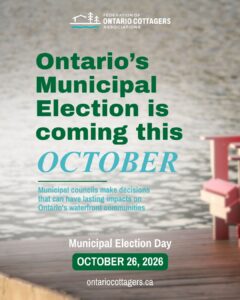
FOCA’s Municipal Election Priorities for Waterfront Communities
1. Protect Lakes, Shorelines and the Environment
Healthy lakes are the foundation of healthy waterfront communities, local economies, recreation, and property values. Municipal councils have a critical role to play in protecting the natural resources that define cottage country
Key Priorities
- Protect, restore, and naturalize shorelines through strong policies, education, and enforcement that preserve water quality, reduce erosion, and enhance the ecological health of Ontario’s lakes and rivers.
- Implement and maintain septic re-inspection programs to protect water quality.
- Protect wetlands, forests, and sensitive natural areas through planning and development decisions.
- Support watershed-based planning and lake health monitoring, and local stewardship initiatives.
- Understand and support initiatives that address invasive species through education, prevention, and local partnerships.
- Build climate resilience by investing in policies, infrastructure, and natural assets that reduce the impacts of flooding, erosion, drought, and extreme weather events.
2. Support Responsible Planning, Development and Growth
Growth in waterfront communities must recognize that a healthy environment is the foundation of a healthy economy and quality of life. Municipal decisions should be guided by environmental protection, infrastructure capacity, and the long-term sustainability of lakes, shorelines, and rural communities.
Key Priorities
- Defend the integrity of municipal planning by applying Official Plan policies and enforcing zoning bylaws and resisting amendments or exceptions that compromise environmental protection, infrastructure capacity, or community character.
- Ensure development decisions are guided by sound environmental science and planning principles.
- Protect the character and carrying capacity of lakes and waterfront communities.
- Require meaningful public consultation and transparent planning processes.
- Encourage development that aligns with existing infrastructure and municipal service levels.
- Preserve public access to water and recreational opportunities where appropriate.
3. Build Resilient Infrastructure and Municipal Services
Municipal infrastructure and services are essential to public safety, economic vitality, and quality of life. Investments should prepare communities for future growth and climate challenges.
Key Priorities
- Invest in resilient infrastructure including roads, bridges, culverts, stormwater systems, and other municipal assets that can withstand changing climate conditions and support long-term community sustainability.
- Strengthen emergency preparedness and public safety through effective flood mitigation, fire protection, wildfire resilience, emergency response planning, and access to rural health services.
- Deliver equitable municipal services for seasonal and permanent residents, including waste management, recycling, emergency services, and other core services that reflect the taxes paid by waterfront property owners.
- Promote fair and transparent taxation and assessment practices while advocating for responsible municipal spending and accountability to taxpayers.
- Improve asset management and long-term infrastructure planning to ensure municipalities can maintain critical services and infrastructure without creating unsustainable financial burdens.
- Leverage partnerships, grants, and innovative funding opportunities to address growing infrastructure needs while maximizing value for taxpayers.
Our Message to Candidates
FOCA encourages municipal candidates to champion policies that protect our lakes, support responsible growth, and invest in resilient infrastructure. Strong environmental stewardship and smart municipal planning are essential to sustaining Ontario’s waterfront communities for future generations.
FOCA wants you to get involved in this election!
We have compiled helpful resources below to support voters during the 2026–2030 Municipal Elections. Explore information on how to vote, recent election updates, checking your voter status, and other election resources. Click here to access FOCA’s Municipal Elections resources.
Municipal Election Resources from FOCA
Download a FOCA-aligned questionnaire that members can use to engage municipal election candidates.
Download a copy of the above positioning statement from FOCA that outlines municipal election priorities for Ontario’s waterfront communities: FOCA’s Municipal Election Priorities for Waterfront Communities (PDF, 2 pages)
Read FOCA’s Media Release on this topic

Confirm you are on the voters’ list. If you need to add your name or update your information, contact your municipal clerk. Changes can be requested until the close of voting on October 26, 2026.
Voter Registration & Eligibility
The 2026 Municipal Election is approaching, and now is the time to make sure you are ready to vote. Your name must be on the voters’ list in order to cast a ballot. If you need to add your name, update your information, or correct information on the voters’ list, you must now contact your municipal clerk. Changes can be requested up until the close of voting on October 26, 2026. Confirm your information If you are unsure whether your information is correct, contact your municipality or visit its website for information about the voters’ list and how to make changes. If you need to be added to the voters’ list, you may be asked to provide proof that you are eligible to vote. Seasonal and non-resident property owners may also be eligible to vote. You do not necessarily need to live in the municipality year-round to qualify. Ontario's Voters' Guide provides information about voter eligibility, including rules for resident and non-resident electors.
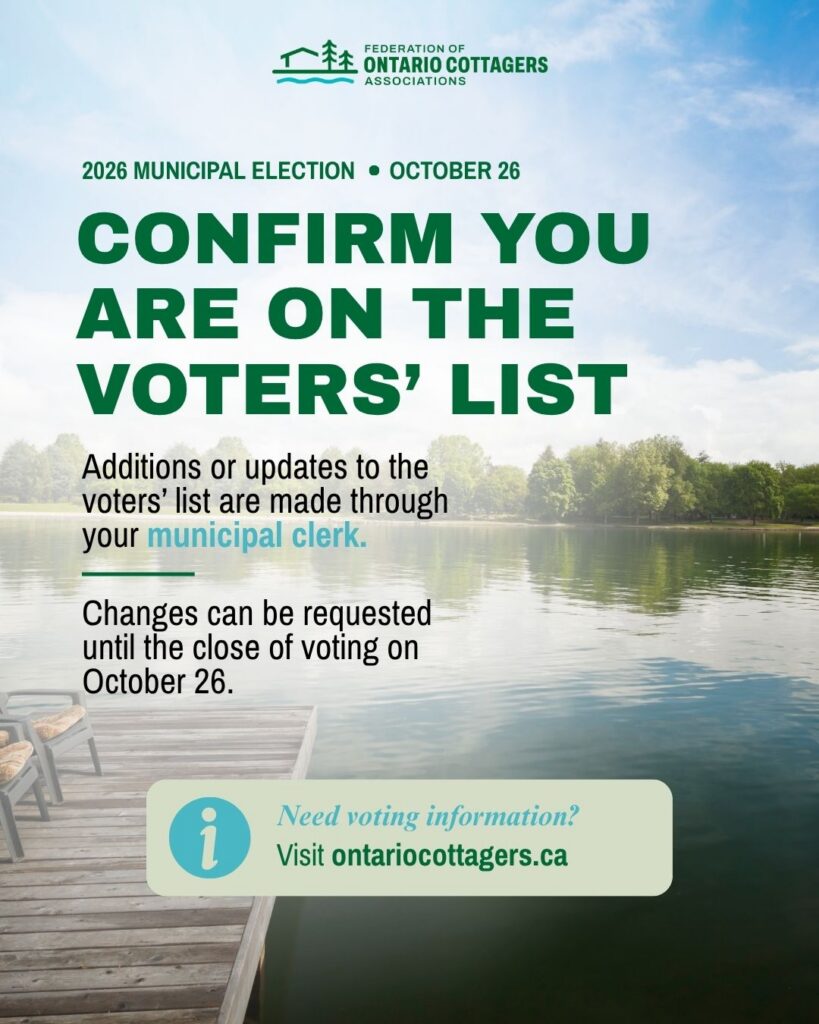
Download and share the “Verify Before You Vote” poster with your community here.
Before voting, remember:
- Confirm you are on the voters’ list
- Contact your municipal clerk if you need to add or update your information
- Check your municipality’s voting options and voting dates
- Make sure you have acceptable identification if voting in person
For in-person voting, Ontario says identification generally needs to show your name and address; photo identification is not required.
Municipal Election Day: Monday, October 26, 2026.
Your municipal vote helps shape the future of your waterfront community.
How, When and Where to Vote in the 2026 Municipal Election
Get information about when, where, and how to vote from Elections Ontario.
Check your municipality’s website to get in touch with your municipal clerk.
Your are required to show identification to vote. If your name is on the voters’ list, you will be required to show one piece of identification that has your name and address. Your photo or signature is not required. See the list of acceptable documents for voter identification.

Important: Ontario’s 2026 Municipal Election takes place on Monday, October 26, 2026. Your name must be on the voters’ list to cast a ballot. If you need to add your name or update your information, contact your municipal clerk. Changes can be requested until the close of voting on October 26.
Each municipality determines its own voting locations and may offer different voting methods, such as mail or internet voting, so check your municipality’s website for local voting information. If voting in person, you generally need identification showing your name and address; photo identification is not required.