FOCA has hundreds of pages of rural waterfront resources! Search any topic:
Aquatic Plants
It is important not to remove aquatic plants from your waterway without first determining what they are, as most of them are integral to the functioning of shallow lake ecosystems. It can be difficult to distinguish one plant from another and to recognize the roles they play. The Fisheries Act protects fish habitat from harmful alteration, disruption, or destruction; therefore indiscriminate removal of aquatic vegetation could be illegal.
December 2025 – the scientific journal “Regulatory Toxicology and Pharmacology” retracted a paper published 25 years ago, that had concluded the main ingredient in the weed killer “Roundup” was safe for humans. It now appears the paper’s conclusions may have been influenced by the company that makes the product, Monsanto.
Health Canada has responded, noting that it’s own evaluation included hundreds of studies and that the retraction of that one paper doesn’t affect their previous review conclusions. Meanwhile, the UN’s International Agency for Research on Cancer classified glyphosate – the main ingredient of the weed killer – as “probably carcinogenic to humans” in 2015. Read more on this issue (CTV News)
Do you know what’s living in your lake?
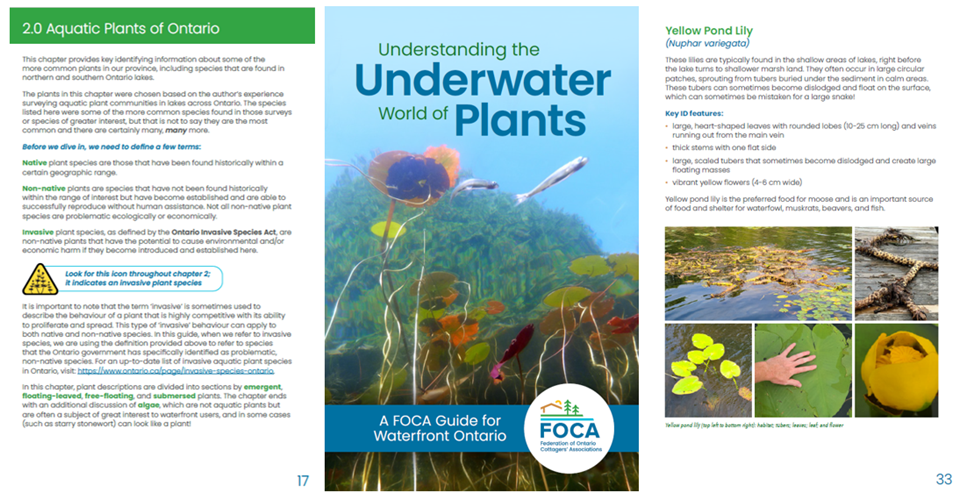
FOCA is often asked: “What’s this ‘weed’ in my water?” Our guide to aquatic plants was created to help you answer that question on your own Ontario waterfront, and decide whether to manage the plants, or leave them where they are.
Then share this information with fellow waterfront residents in your community!
More Information About the FOCA Aquatic Plants Guide:
Chapter 1 provides an overview of plant ecology – why particular aquatic plants are located where they are, and what they do for us and for the ecosystem.
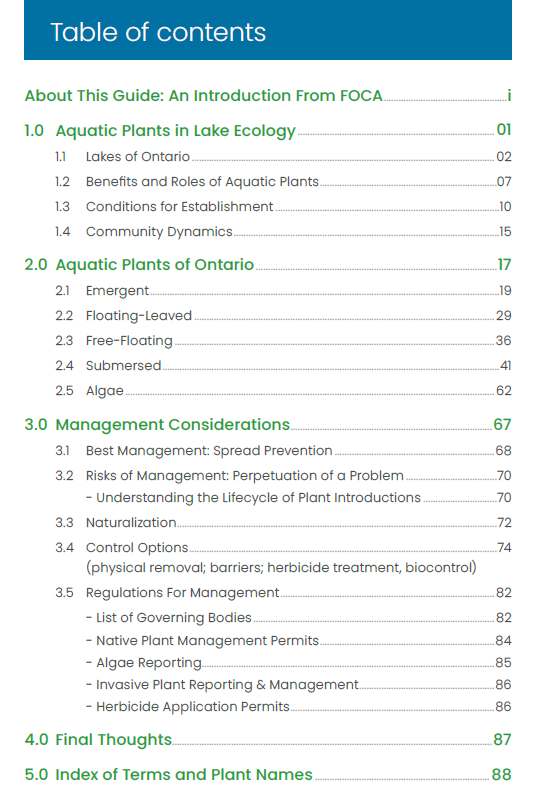
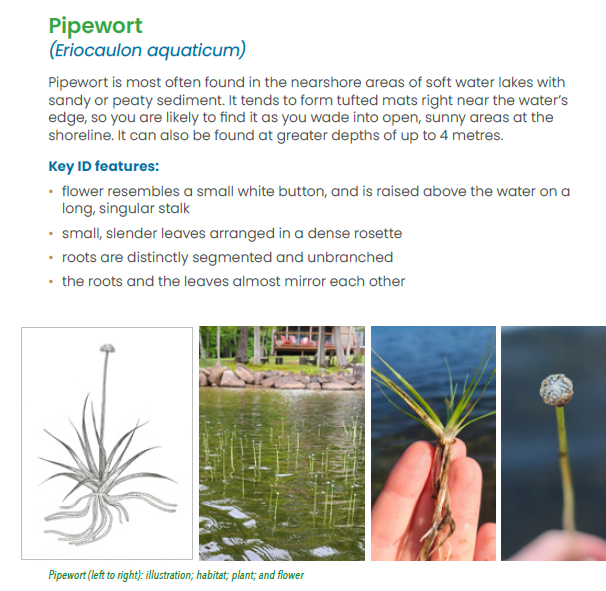
Chapter 2 includes descriptions, photos, and illustrations to help you identify common aquatic plants in Ontario. Sections include emergent plants, floating-leaved plants, free-floating plants, and submersed plants. We have also included a section on algae which are not plants but rather microscopic organisms that can have a plant-like appearance in the water.
Chapter 3 discusses what to do about control options.
In many cases the answer is: do nothing – that plant is meant to be there, and it has an important role!
In some cases, the answer is: that plant is non-native or invasive, and could have negative impacts. However, there may be specific restrictions on what can be done to manage it, depending upon where you are located.
Sometimes even a native aquatic plant – one naturally found there – can become so prolific that it makes it more difficult to swim or boat nearshore. Learn more in Chapter 3 about what can and should not be done if there are abundant in-water plants in your area.
We hope this guide will help you understand and respect the organisms in your local lake or river, and will give you the information needed to make responsible decisions when you encounter them.
Please share these resources with others on the waterfront and help us to spread the word about the importance of aquatic plants, and how to prevent the spread of invasive species!
Acknowledgements:
As a member of the Green Shovels Collaborative, FOCA gratefully acknowledges financial support for this project from the Invasive Species Centre.
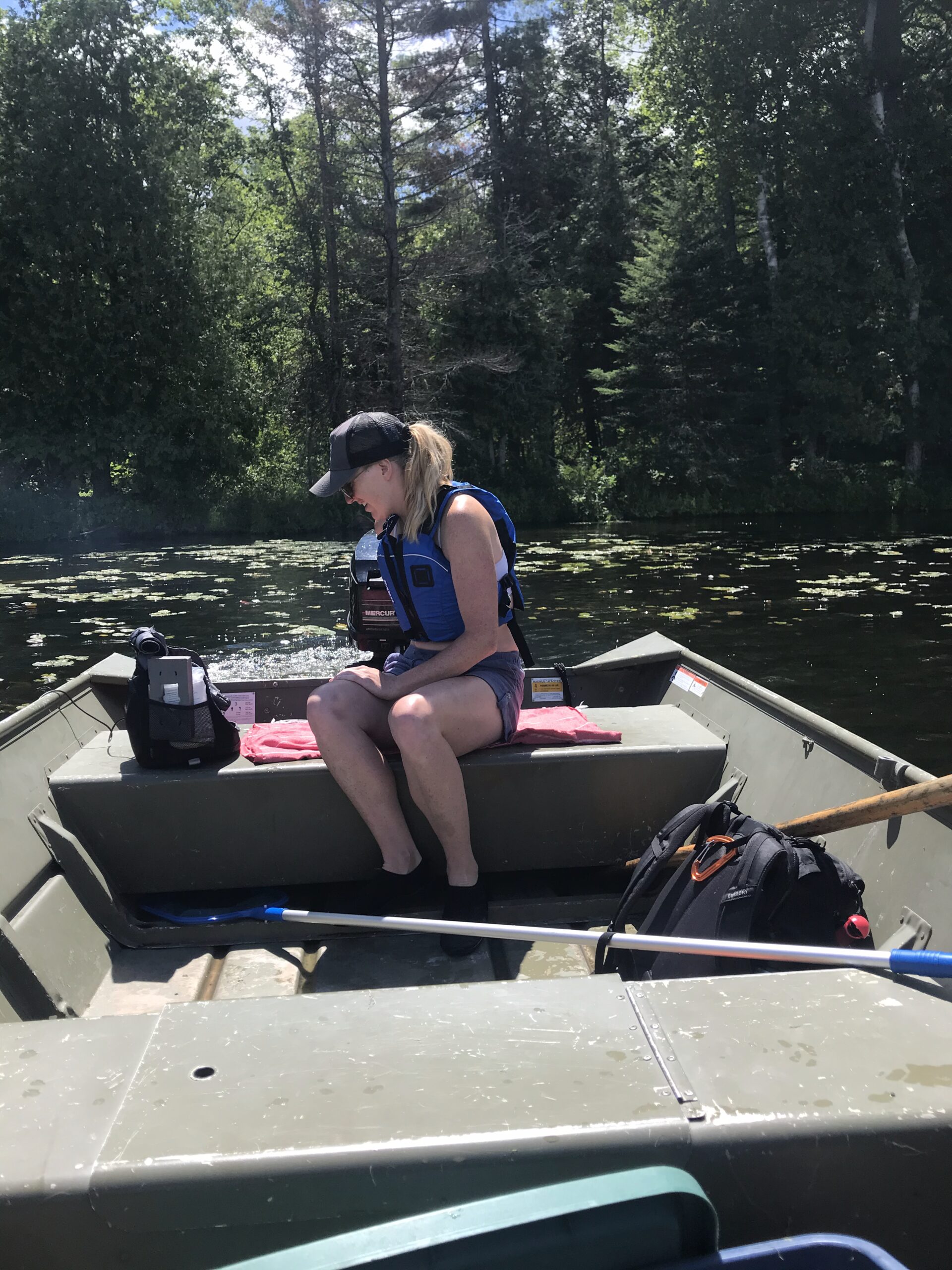
FOCA sincerely thanks Kaleigh Mooney – ‘The Weeds Woman’ as we affectionately call her! – for writing this guide. (Kaliegh is pictured at the side, making plant identifications on Stoney Lake)
Photos in the guide are by Kaleigh Mooney or FOCA, except where otherwise indicated, with special thanks to Andy Metelka for his spectacular underwater photography, including the cover image.
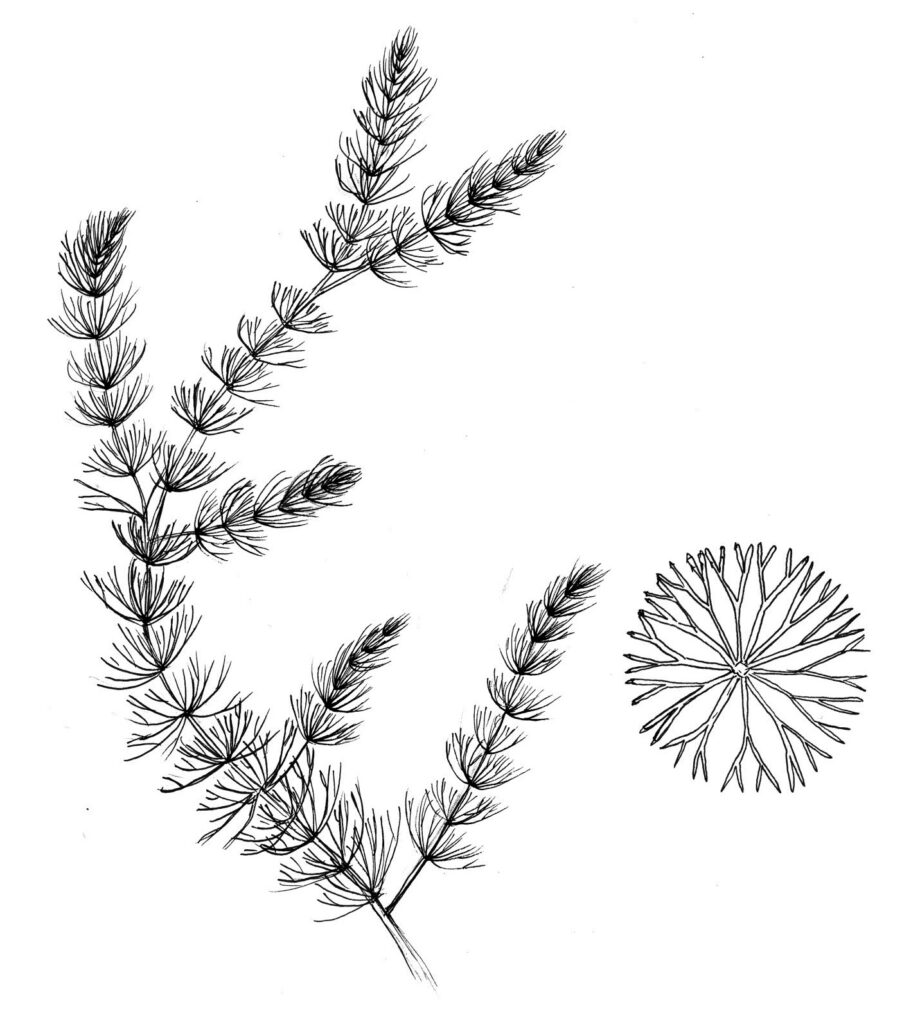
Thank you to Lucy Martin-Johnson for the beautiful line illustrations of the plants. (Pictured at the side: coontail)
Thank you to our readers Dr. Eric Sager, Dr. Tom Whillans, and Dr. Autumn Watkinson for sharing their invaluable knowledge and guidance.
Clean + Drain + Dry:
Be part of the solution for preventing the spread of invasive species by boat. It’s now the law in Ontario to Clean+Drain+Dry your boat, trailer and gear before moving to a new waterbody. Learn more here: https://www.ontario.ca/page/invasive-species-action-plans/#boaters
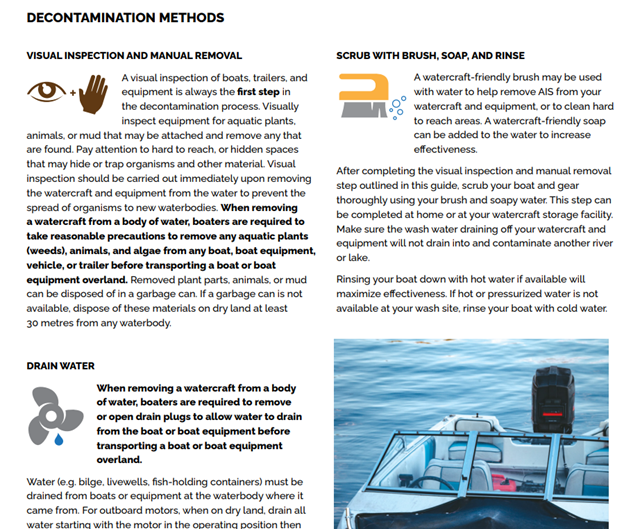
Download a copy of the Province’s Guidance for watercraft users (PDF, 12 pages; source of the image at the side) on best management practices for preventing the spread of aquatic invasive species. Together, we can prevent the spread.